Cold-Weather Performance, Proven in the Field
Overview
When designing cold-weather glove materials, performance is typically validated in lab settings with controlled temperatures, flex cycles, and standardized stress tests. That data is essential, but it doesn’t capture what happens in real-world conditions.
AX SubZero, the newest material innovation from AX Materials, was built for high performance in extreme cold-weather conditions. To meet these demanding requirements, it was essential to demonstrate that it can withstand the daily activities for which it is intended.
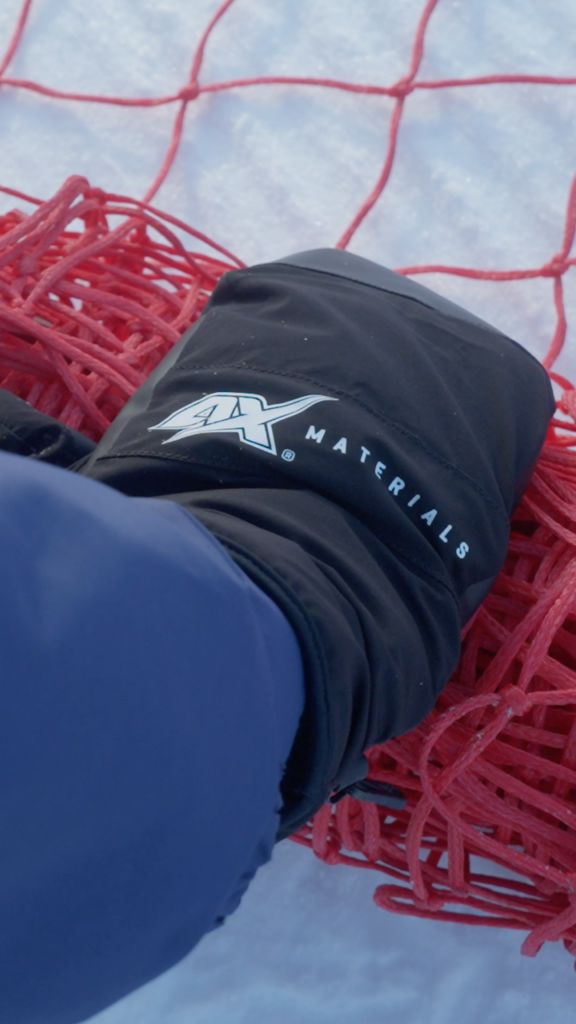
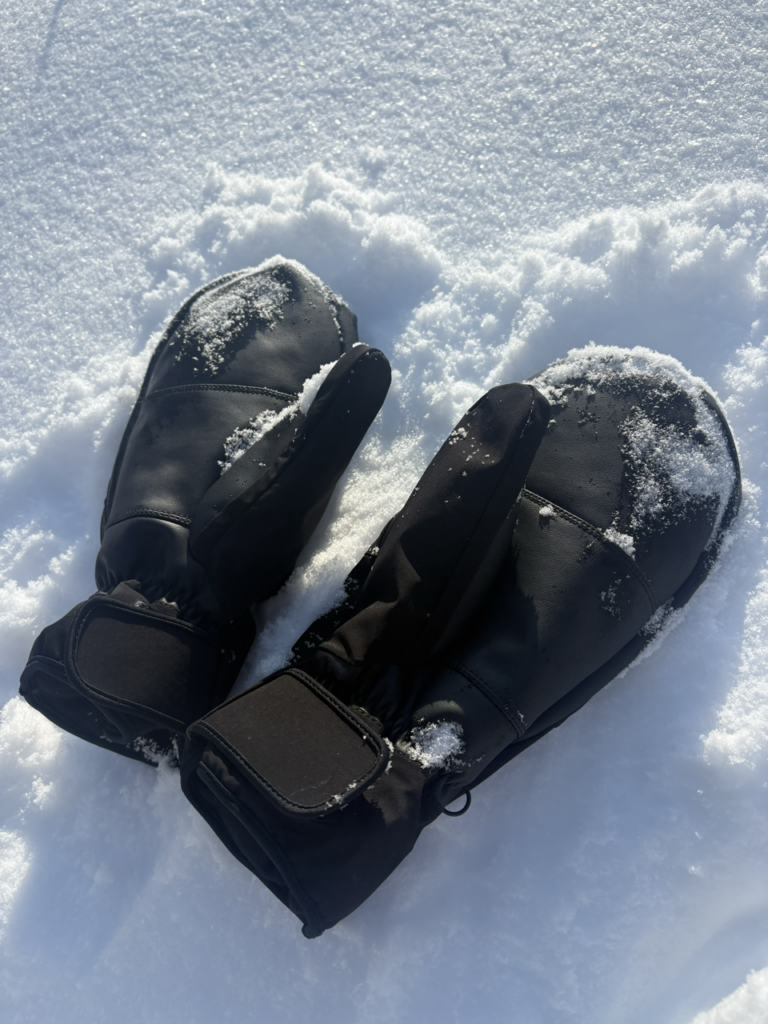
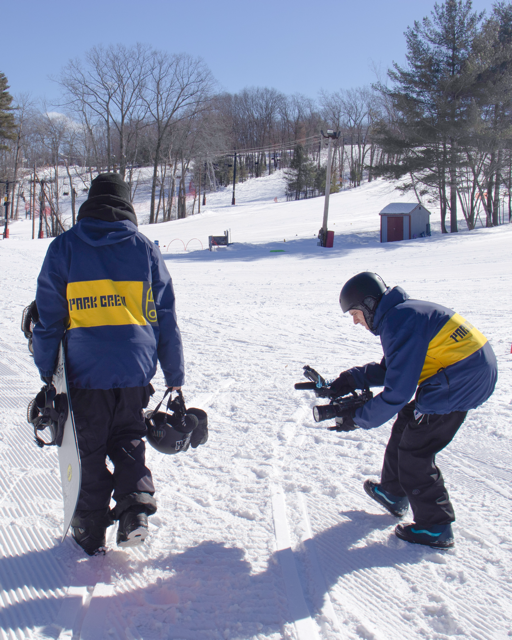
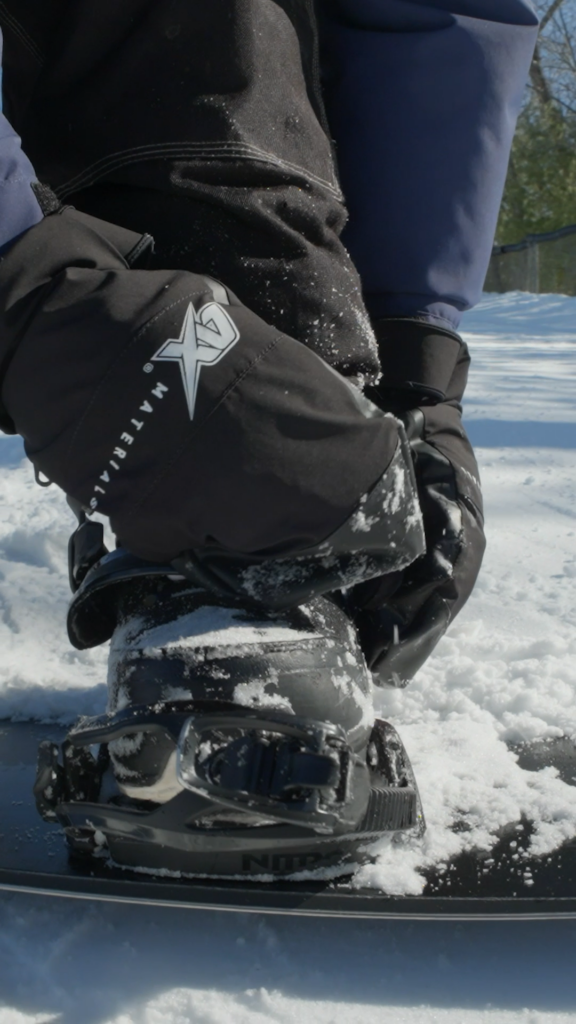
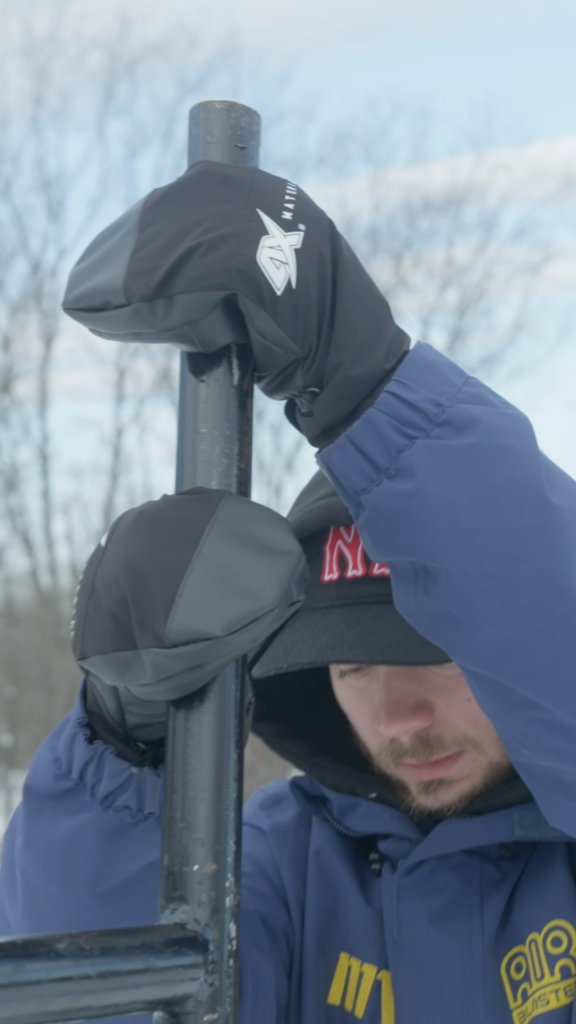
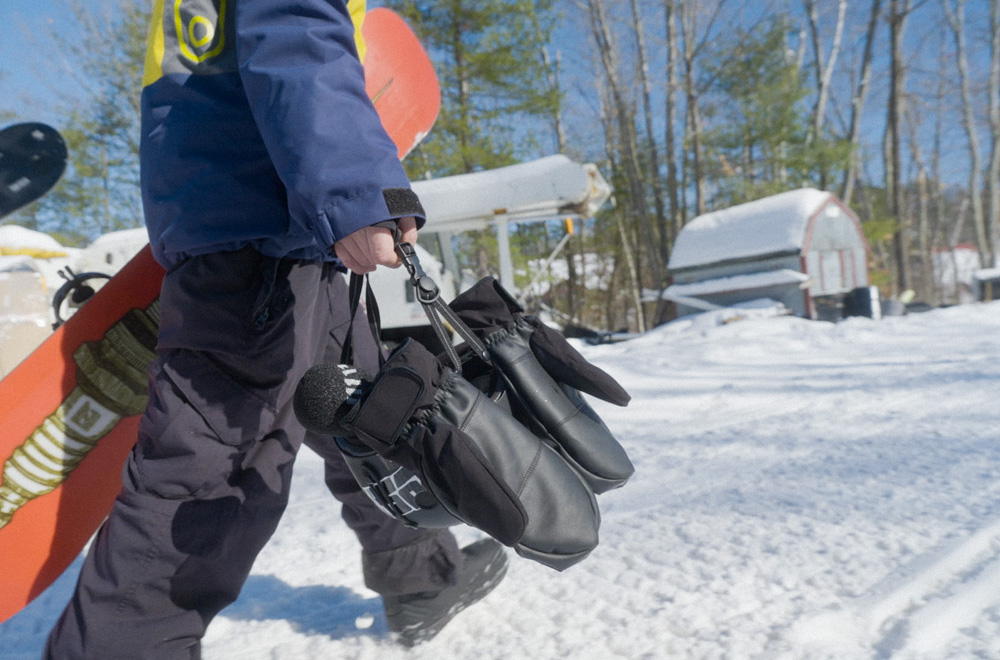
To put the material to the test, we created prototype gloves for the terrain park crew at McIntyre Ski Area in Manchester, New Hampshire. Their jobs combine construction work with snowboarding — two end uses for which the material was created. While wearing the gloves, the crew spent a workday building the terrain park in bitter New Hampshire temperatures. They also used the gloves while snowboarding after-hours to show how it transitions from work to play.
This hands-on experience provided insights into the gloves’ durability, grip, and overall performance, while informing us of potential improvements as we continue modifying the material. Through this field testing, we confirmed that SubZero performed exactly as intended.
Innovating for the Cold
Natural leather and polyurethane (PU) have traditionally been used for palms on winter gloves. The material allows palms to be lightweight, durable, and flexible, but when temperatures drop well below freezing, their pain points are evident: palms stiffen, coatings crack or peel under repeated flexing, and exposure to cold compromises grip and dexterity.
When gloves stop performing at their highest level, users tend to remove them to get the job done. At that point, not wearing gloves can go from an inconvenience to a life-threatening situation. In freezing conditions, these risks only multiply. With SubZero, we set out to create a material that could address the needs other cold-weather glove materials on the market lacked.
Many of the pain points were solved by using a TPEE (Thermoplastic Polyester Elastomer) rubber coating in place of PU. TPEE’s rubberized properties bridge the performance gaps of PU, enhancing flexibility, strength, and resilience in cold-weather applications.
With this TPEE construction, SubZero achieved performance and reliability that other glove materials were unable to match.

“We’re outside in all kinds of conditions. Sometimes it’ll be 40° and other times it’s way below 0.
Luke Boutin, Terrain Park Manager
So making sure that our gear can reflect the conditions is very important.”
SubZero Features
SubZero was designed to balance key features for protection and performance:
- Flexibility: The material allows gloves to move and bend without compromising performance at low temperatures. This enables smooth movement for both high-risk situations and basic repetitive tasks.
- Grip: SubZero provides a reliable grip, crucial for safety and efficiency, allowing users to securely handle tools and objects.
- Abrasion Resistance: The material is engineered to endure wear and tear, especially in harsh environments with rough surfaces or heavy use.
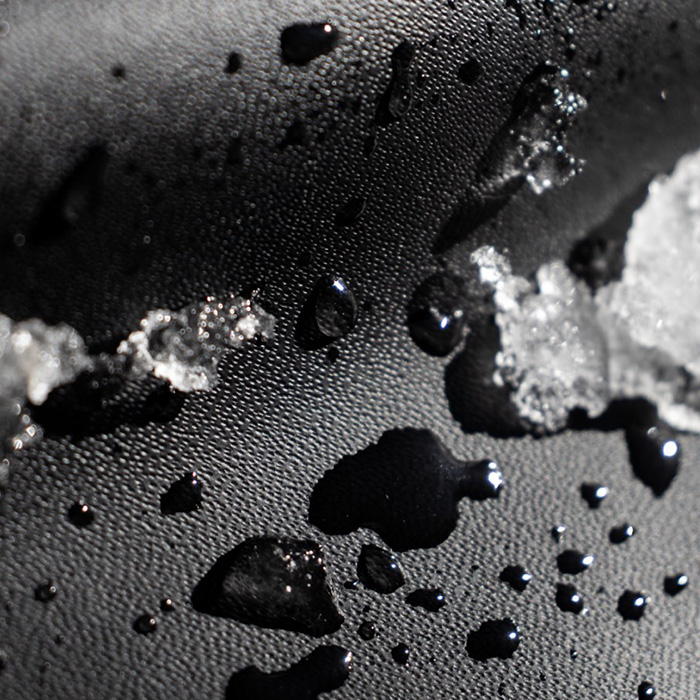
- Surface Protection: SubZero has a protective surface barrier that resists water, oil, chemicals, and other hazards.
To validate its durability, SubZero underwent standard laboratory testing for Abrasion/Tear, including EN388 Abrasion, EN388 Tear, and ANSI/ISEA 105-2016 Abrasion.
SubZero 0.75 mm
| EN388 | Score |
| Abrasion | Level 4 |
| Tear | Level 2 |
| ANSI/ISEA 105-2016 | Score |
| Abrasion | Level 3 |
Another important test for SubZero was the Cold Crack Test, a flexing test that evaluates a material’s susceptibility to surface cracking and failure in extremely low temperatures. The test proved that AX SubZero can withstand 30,000+ cycles in temperatures as low as -30°C (-22°F) without loss of flexibility or surface cracking in any length or width direction.
With lab results as promising as these, the next step was to hear the park crew’s feedback.

McIntyre Park Insights
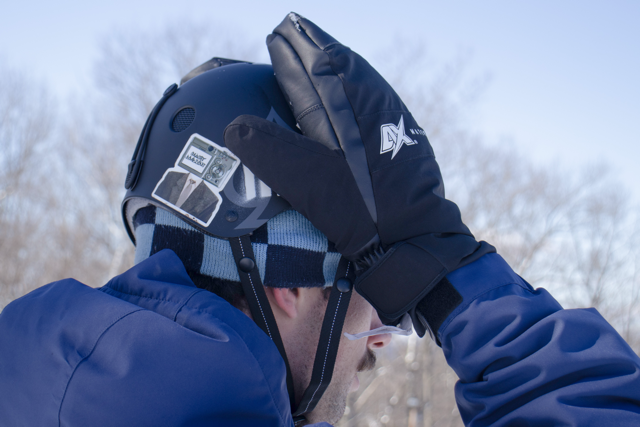
The park crew’s feedback provided valuable insight into how SubZero can meet expectations for cold-weather gloves.
Throughout the day, the park crew wore the prototype gloves during their regular maintenance of terrain park features.
They raked snow, carried and repositioned steel rails and metal signage, and reshaped features: tasks that required consistent grip, durability, and dexterity. The gloves were also used while operating grooming machines and power tools.
In the process, the gloves were also exposed to snow, ice, salt, oil, chemicals, and fuel for gassing up snowmobiles, as well as paint for marking features.
After the workday, the same gloves were used for laps in the terrain park, testing their dexterity and flexibility with grabs and fastening bindings.
For both their day-to-day work and snowboarding, the crew needs a warm glove that withstands cracking and peeling in cold weather.
“I think a glove should perform in that you forget that you’re wearing it. It should keep your hands warm,
Luke Boutin
it should grip whatever you’re doing very well, it should have good dexterity, it should be strong, and to be honest,
these gloves have held up to every single one of those qualities, which is a hard task in itself.”
Conclusion
Glove performance in winter work environments requires a balance of flexibility, grip, abrasion resistance, and structural stability — along with the ability to withstand extreme temperatures. Field testing showed that SubZero maintains that balance beyond controlled lab conditions.
For crews who rely on their gloves daily, that stability means longer glove lifespan, fewer mid-shift changes, and less temptation to remove gloves when conditions make that risky.
The results are clear: when the stakes are high and the temperatures are low, SubZero is built to protect and outperform.